TalkTalk – London Office
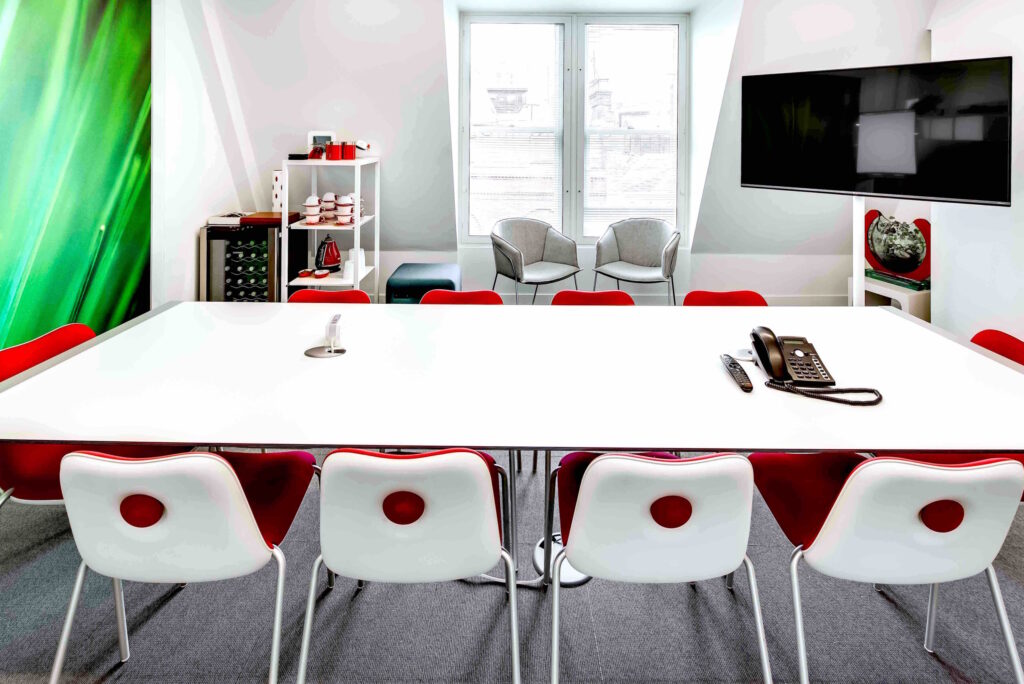
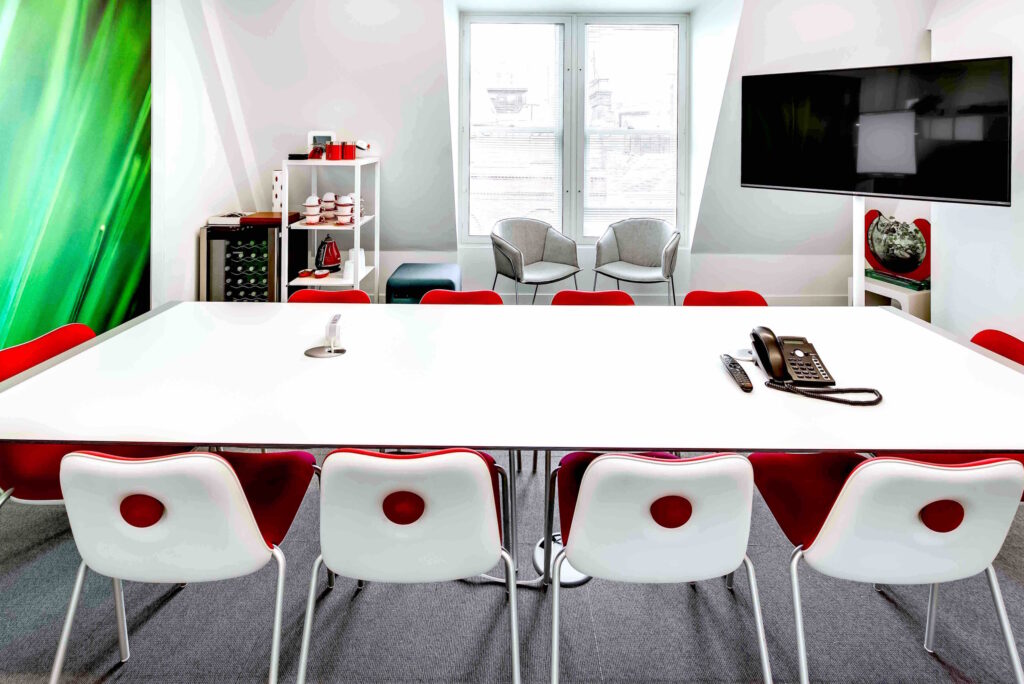
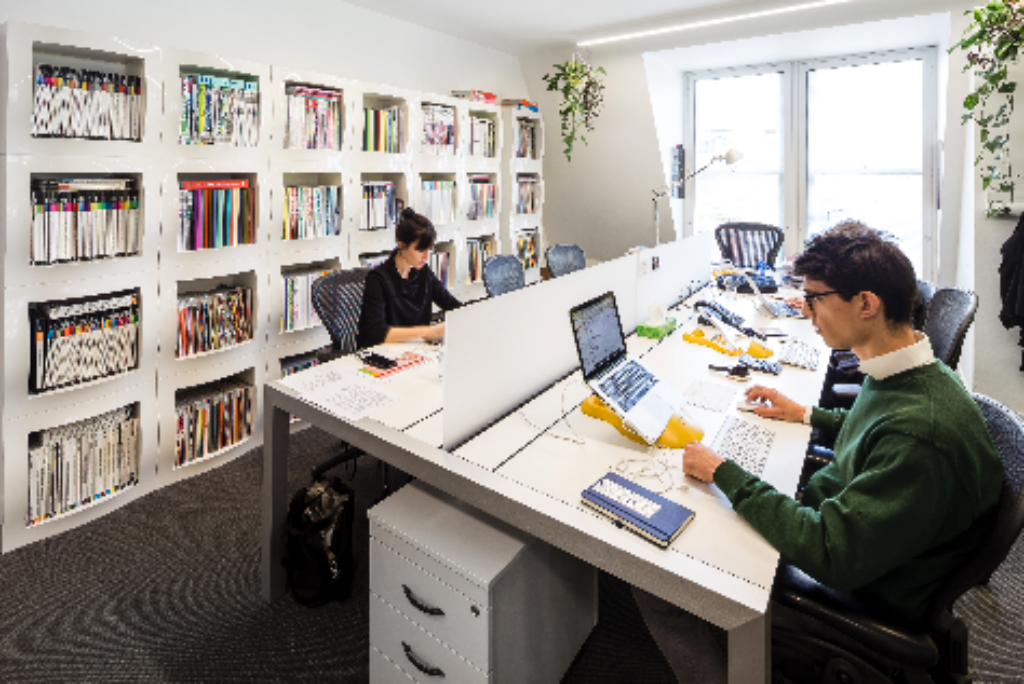
TalkTalk wanted to relocate their London office away from CarPhone Warehouse which is its sister company. They wanted to do this in order to establish their own HQ identity, part of this was to focus on fitting out the huge landmark building sustainably for 830.
Sustainability’s not our speciality and we looked for advice…everything we did had an environmental issue.
Mark Flynn, Project Manager, TalkTalk
To achieve these aims the project reduced its waste to landfill by 92% and used FSC and PEFC timber – making it the first UK project where this wood was used extensively for both flooring and joinery. The project received a BREEAM rating of ‘Excellent’.
[via]
Hydrogen Energy – Surrey Office
Morgan Lovell recently fitted out and designed the offices of Hydrogen Energy, a company with offices in Surrey. Hydrogen Energy is a company that is dedicated to tackling climate change, and so they wanted their new Surrey offices to reflect both their corporate identity and their commitment to the environment.
From the start, we sourced all their furniture and other equipment from the UK to keep long haul transportation to a minimum. We chose recyclable desktops and furniture made from long lasting materials, and we installed the most energy efficient lighting systems available.
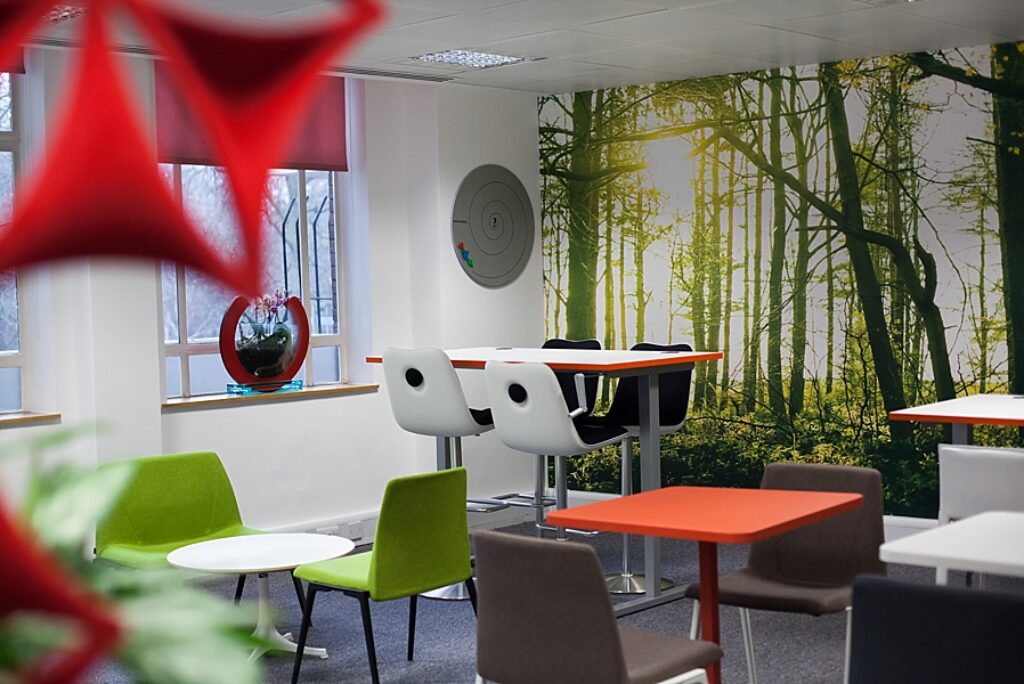
To create a natural, outdoor feel, we built three special break out zones for informal meetings – one on decking by the river next to the office, another in the open-air courtyard, and the third inside with a forest scene across one wall. And once we had finished the project, we made sure that we offset all CO2 produced during the fit out – Hydrogen Energy’s new office is truly carbon neutral.
[via]
HOK London Office – LEED Gold
HOK is a global architectural firm that specialises in planning, design and delivery solutions for buildings and communities. Their London office is rated LEED Gold, which in case you are unaware means that it is quite environmentally friendly, with only LEED Platinum being a higher rating. The London office is green to its core, beginning with the actual construction project. The company’s plentiful resources allowed it to become the first LEED Gold building in the United Kingdom. Designers selected low formaldehyde and low volatile-organic compounds when selecting the finishes, furniture, and carpet.
To add to that environmentally friendly build, the London branch also features a central patch of grass which is keenly used by the company’s employees to have lunch and just generally relax. There’s even a picnic table with a classic red-and-white checked tablecloth at one end, and small trees interspersed throughout the building.
[via]
TNT Express – Office Hoofddorp, Holland
TNT Express is a shipping company that specialises in speedy courier services of various kinds. The company ships items all over the world, with a capacity of over 30,000 vehicles and 50 aircraft that allows them the infrastructure to deliver and ship parcels quickly (or at least thats the idea anyway!). They’ve just opened a new HQ in Hoofdrop which is in Holland. The office is sustainable and as green as can be, achieving LEED Platinum ratings, and taking TNT one step closer to their goal of being the first carbon-neutral shipping company in the world. The office space was designed by the architectural firm Paul de Ruiter.
These offices are very nice indeed, I especially love the little private nook areas which are intended to act as hotdesking spaces. However the office does perhaps lack a bit of colour, who says environmentally sustainable design needs to be bland? What do you think?
[Pictures by Oliver Schuh, via Office Snapshots]
Green Building Concept – Chicago
The Paris based architectural firm influx studio has designed a concept building it calls the ’algae green loop’. The design is aimed at being an algae retrofitting of the marina city towers in Chicago, USA.The concept aims to use the natural CO2 absorbing characteristics of flora to help decarbonise urban environments. The buildings recognise the growing need for sustainable cities, something which many of us realise will only become more and more pertinent as the world continues to ceaselessly develop. By retro-fitting and using pre-existing structures not only would they be creating a new environmentally friendly building design, but they would also be working very realistically towards a zero footprint project.
[via]
Berimbau Eco-tower – Rio de Janeiro, Brazil
The Berimbau Tower is located in Rio de Janeiro, Brazil. It is a telecoms building designed to be used during the 2014 football World Cup and the 2016 Olympic Games. The tower is not only striking and unique in design, it is also created to be eco-friendly with all the components being recoverable, recycled and reused. What’s more the tower features a heated greenhouse and a geothermal heat pump.
Part of the inspiration behind the tower is the Brazilian Capoeira dance and the Berimbau, an ancient Brazilian musical instrument. This spherical building has 5 levels, the lower level is aimed at recreational activities, while the second and third level has a gazebo and shops. Most importantly the fourth and fifth levels will be office space and conference rooms, these will surely be some of the most breathtaking office spaces in Rio de Janeiro! It is a shame that the internal design of the offices are not available.
[via]
Eco-technology House
At an exhibition held in Cairo, Karim Rashid presented his version of the future of ecological housing. Rashid calls it the Komb House – a super colorful showcase of the most cutting edge eco-technologies available. What is especially interesting is that he fuses traditional Islamic design principles with contemporary sustainable design. If nothing else, this Egyptian designer demonstrates that being eco-friendly can also be über cool!
BP – Rotterdam Office
BP’s new Rotterdam office seems to be an integral part of the landscape, almost swallowed up by the ground itself! The building is designed with a green roof that serves as both insulation and physical protection; this is because the office is located so close to a refinery it needs to be explosion proof. The interior of the office is simply stunning, making great use of natural materials such as wood and stone. One can only imagine that a company who has had such a PR disaster in recent times is trying to repair their image nudging it towards environmentalism and nature.
[via]
Designing an Eco-Friendly Office
With rising energy cost, the oil crisis, and environmental concerns, the concept of green building practices are becoming popular, if not necessary, for home and business owners. Large commercial buildings consume a lot of energy which is costly to the owner and the environment.
Designing your new office space, or current office space, to be green is a beneficial way to help save money and do your part to reduce your carbon footprint. If you’re not a business owner yourself, you can help by making some green suggestions to your supervisor for your company to consider; mentioning the savings your company could accrue is always a good strategy to convince them.
Unless remodeling an existing structure, going green can start from the ground up. When building a new structure, use a permeable foundation instead of regular concrete so that water can return to the ground. After designing a layout that utilizes natural light and air sources, use natural or recycled materials if possible. Try to buy materials from local sources to cut down on transportation costs. Choose manufacturers who practice sustainable friendly ways of creating their products. Products like sustainably-harvested wood, reclaimed lumber, renewable plant material like bamboo, recycled metal, or stone are all great materials to consider in your design.
When it comes to heating and lighting your space, solar panels can be placed on a roof angled toward the sun to light or heat the building. Use energy efficient, double-paned windows to help avoid heat loss. Another wayto utilize natural light is by creating a skylight. When it comes to artificial light, utilize lights with motion detectors, or timed lights, as well as florescent bulbs. If you property allows for the installation, wind power and hydro power are other forms of energy that can reduce the environmental impact and cut energy costs.
When all the construction is complete, recycle or donate unused materials. When it comes to the interior design, use paints, carpets, and furniture that were made without volatile organic compounds (VOCs). VOCs are chemicals that can be found in materials like paints and glues and can emit harmful gasses and lower the air quality of your office. Paint is a better choice than wallpaper because it is less likely to contain VOC.
The hum of electronics is the sound of energy being eaten. With rising energy cost, this is detrimental to the budget of a business as well as to the environment. Technical equipment is a major energy drain; use computers, printers and any other office equipment with the Energy Star label. This ensures that the equipment is efficient with its energy use. Turn computers off at the end of the day or during periods of inactivity to save electricity and money.
Waste management and recycling are important components to an eco-friendly office. Paper waste is common. Consider recycling paper, printing on both sides of each sheet, using recycled paper or going paperless. Keep recycling bins on site to collect soda cans, paper waste, glass, and other recyclables. This goes for ink cartridges as well. Recycling saves trees, resources and reduces the amount of garbage in landfills.
Designing an eco-friendly office is a great investment for your business and for our environment. Even if you are not able to renovate much of the structure to be green, you can initiate office wide recycling programs to still practice being eco-friendly. These small steps can help in an effort to reduce your company’s overall carbon footprint.
[box] Courtesy of Douglas Elliman Realtors, Agents for New York City Real Estate.[/box]
Environmental Science Centre
Located in the Hartford, “Connecticut Science Center” is a LEED-certified green building designed by the world-renowned architect Cesar Pelli. The building covers an entire area of 144,000 square feet in total, and has a 15 stories tall atrium, and impressively, in the construction of all this 95% of the steel used is manufactured from recycled cars!
The green profile of the science center feature several more environmentally features; use of a fuel cell to as the power source, the rooftop garden, energy-saving glass and sensors for detecting the level of ambient light, just to name a few.
[Via]